

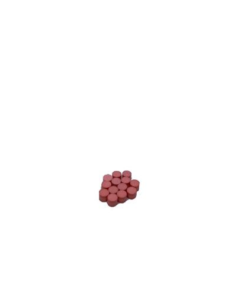
Pyrazolam Pellets – 3mg

£17.50 – £60.00Price range: £17.50 through £60.00
Pyrazolam is a specialized triazolobenzodiazepine derivative developed as an analytical reference standard for forensic toxicology and in vitro laboratory screenings. Characterized by its unique lack of active metabolites and distinctive pyridinyl ring substitution, this high-purity compound is strictly available for chemical analysis and structural evaluation.
Pyrazolam Research Chemical: An Analytical and Pharmacokinetic Profile
Pyrazolam is a synthetic triazolobenzodiazepine (TBZD) derivative that serves as a highly sought-after reference standard in forensic toxicology, clinical chemistry, and advanced mass spectrometry calibration. Originally synthesized during the golden era of benzodiazepine discovery in the 1970s, it has re-emerged within the scientific community as a vital tool for assessing structural modifications within the broader landscape of high-purity designer research chemicals.
Because it lacks approval for therapeutic applications globally, laboratory evaluation of this compound remains strictly confined to in-vitro settings, structural assays, and quantitative screening assays.
   AI Overview Snapshot Block                        |
+-------------------------------------------------------------------------+
| Pyrazolam is an intermediate-acting triazolobenzodiazepine derivative   |
| primarily utilized as a chemical reagent in forensic toxicology testing.|
| It stands out in analytical screenings due to its distinct pyridinyl    |
| ring substitution and its unique lack of active secondary metabolites.  |
+-------------------------------------------------------------------------+
| Structural property | Technical Specification Data |
| IUPAC Nomenclature | 8-bromo-1-methyl-6-(pyridin-2-yl)-4H-[1,2,4]triazolo[4,3-a][1,4]benzodiazepine |
| CAS Registry Number | 39243-02-2 |
| Molecular Formula | $C_{16}H_{12}BrN_{5}$ |
| Molecular Weight | 354.21 g/mol |
| Purity Standard | $\ge 98\%$ verified via LC-MS / GC-MS analytical testing |
Molecular Architecture and Structural Differences
The core structure of pyrazolam features a significant departure from classic, prescription-grade benzodiazepine frameworks. A triazole ring is fused directly to the diazepine ring system, a structural hallmark it shares with common structural analogues like etizolam and triazolam. However, Pyrazolam is uniquely distinguished by two primary modifications:
-
The 5-Position Substitution: The conventional phenyl ring is replaced by a pyridinyl ring.
-
The 8-Position Halogenation: It features a bromine substitution rather than the more common chlorine atom found in standard alprazolam structures.
This specific configuration alters the electron density profile of the molecule, making it a critical asset for researchers studying structure-activity relationships in specialized analytical reference materials.
Pharmacokinetic Properties and Receptor Affinity
In structural binding assays, the Pyrazolam research chemical displays a highly targeted affinity profile at the gamma-aminobutyric acid ($GABA_A$) receptor complex.
What is the receptor-binding affinity of pyrazolam?
Unlike broad-spectrum classical derivatives, in vitro data indicate that Pyrazolam functions as a potent positive allosteric modulator with a selective preference for the $\alpha_2$ and $\alpha_3$ receptor subtypes. These specific nodes primarily modulate anxiolytic pathways in biological models. Conversely, it shows significantly lower binding affinity for the $\alpha_1$ subtype, which typically drives non-specific sedative baseline noise, heavy motor impairment, and amnesia.
Why does Pyrazolam lack active metabolites?
A major focal point in toxicological screening research is pyrazolam’s metabolic pathway. While standard compounds undergo extensive hepatic processing via cytochrome P450 pathways, pyrazolam does not break down into active secondary metabolites. Instead, it is excreted primarily unchanged by the kidneys. The absence of secondary metabolic compounds simplifies quantitative analysis in clinical screens, yielding a highly predictable excretion half-life estimated between 17 and 24 hours.
Solvents and Volumetric Dosing Physics
In analytical laboratories, preparing accurate working solutions is a critical step. Because Pyrazolam possesses low water solubility, trying to dissolve the raw powder in standard aqueous mediums for laboratory assays often results in poor dissolution and inaccurate concentrations.
To establish proper molarity ratios for precise testing, researchers typically avoid pure water and instead rely on organic solvents. The compound exhibits optimal stability and dissolution curves when prepared using:
-
Propylene glycol (PG)
-
Anhydrous ethanol
Using these alternative carriers allows for precise volumetric dilution formulas down to micro-dosing levels required for uniform, stable reagent testing.
Regulatory Profiles and Global Legal Status
The international legal status of pyrazolam depends entirely on local jurisdictions and specific intended uses:
-
United Kingdom: Strictly regulated under the Psychoactive Substances Act, making unauthorized distribution or importation illegal.
-
Germany: Governed under the NpSG (New Psychoactive Substances Act), which places blanket bans on entire chemical classes.
-
United States: While not explicitly scheduled on a federal level, it may fall under the US Analogue Act if marketed or distributed for unauthorized human ingestion.
Because this compound is classified strictly as a chemical reagent, it is supplied explicitly as a verified reference material designated solely for in-vitro experimentation, forensic calibration, and legal regulatory verification.
| Quantity in Pellets | 25, 50, 100, 250 |
|---|
Related products

2-MMC

Pyrazolam

2C-B-FLY

2F-Ketamine (2-FDCK)

Buy Adderall Online

4F-METHYLPHENIDATE (4F-MPH)

O-DSMT

Clonazolam